

Owning a stroller wagon means learning which stroller wagon accessories and replacement parts support your family's real routines. Over time, families discover which wheels suit their routes, which add-ons make a day easier, and which worn component should be addressed before the next outing. This guide explains how to care for a stroller wagon, choose useful accessories, identify replacement parts. And plan a more comfortable ride for children with different mobility and sensory needs.
Explore Keenz stroller wagons and find the right starting point for your family.
How do stroller wagon accessories and replacement parts support ownership?
Stroller wagon ownership includes selecting the right configuration, learning the wagon's normal setup and folding process. Checking high-use components, and adding only the accessories that support your family's routines. It also means keeping model information handy so that a replacement wheel, canopy, harness component, or fabric panel matches the wagon it was designed for.
A stroller wagon can serve as a child carrier, gear hauler, nap space, and outdoor transportation in the same week. That range of use creates different wear patterns. A family who walks on paved sidewalks may focus on storage and shade. While a family who visits parks or outdoor events may pay closer attention to wheels, handle feel, and weather protection. The best ownership plan starts with how you actually use the wagon, not with a long list of add-ons.
How do you decide whether to repair or replace a stroller wagon part?
The first decision is whether the problem is limited to one removable component or affects the wagon's main structure. A replaceable wheel, canopy fabric panel, cargo bin fabric section, harness pad, handle component. Or hardware piece may allow you to restore the wagon without replacing the full frame. A bent or damaged frame, a compromised closure mechanism, or a part that does not lock securely deserves more careful review before the wagon is used again.
Use this quick repair decision checklist
- Identify the symptom. Note whether the issue affects rolling, folding, steering, seating, shade, storage, or restraint hardware.
- Identify the wagon. Record the series name, passenger configuration, and any model or product information shown on the wagon or in your order history.
- Separate fabric from structure. A torn fabric body or canopy may need a different part than a damaged frame, axle, wheel mount, or closure mechanism.
- Check the connection. Look for missing bolts, loose fasteners, clips, springs, or adjustment buttons, but do not improvise hardware that was not designed for the wagon.
- Stop when safety is uncertain. If a harness, brake, frame, wheel mount, or locking mechanism does not work as intended, contact Keenz for guidance before the next ride.
Keenz maintains a dedicated replacement parts collection with components for different stroller wagon series. Use the catalog to compare the part name and model family, then confirm compatibility before ordering. Similar-looking wheels, canopies, or fabric pieces are not automatically interchangeable.
Which stroller wagon parts wear out first?
Wear depends on mileage, terrain, storage conditions, cleaning habits, and how often the wagon is folded. Families commonly inspect wheels, axles, brakes, canopies, fabric bodies, cargo storage, harness components, and high-touch handle hardware. A visual check before a busy season can help you find a small issue while it is still easier to address.
| Part or area | What to inspect | When to investigate a replacement |
|---|---|---|
| Wheels and axles. | Rotation, tread, cracks, wobble, and attachment points. | The wheel binds, wobbles, shows damage, or no longer rolls normally. |
| Canopy. | Fabric, frame, attachment points, and shade coverage. | Fabric is torn, the frame will not stay positioned, or an attachment is damaged. |
| Seat and body fabric. | Seams, seat support, closure points, and cleaned surfaces. | Fabric damage changes support, fit, or normal operation. |
| Harnesses and pads. | Buckles, webbing, stitching, clips, and padding. | A buckle does not latch, webbing is damaged, or a component is missing. |
| Frame and hardware. | Folding joints, bolts, springs, handle adjustment, and closure. | The frame is bent, will not lock, or a structural connection is not secure. |
| Cargo and accessory areas. | Pockets, bins, trays, and attachment points. | Storage is torn or an accessory no longer attaches as designed. |
This table is a starting point, not a substitute for the instructions for your exact wagon. If a part is model-specific, use the series name and the official product listing together. That extra minute helps prevent ordering a component that fits a different generation or configuration.
What accessories make a stroller wagon more useful?
The most useful stroller wagon accessories solve a repeated problem. Choose an add-on because it improves a real routine, such as carrying drinks, protecting the wagon from changing weather, creating more shade, or organizing small essentials. Accessories should support the wagon's intended use without obstructing harnesses, brakes, folding points, visibility, or the manufacturer's instructions.
Keenz offers a broad stroller wagon accessories collection. Availability and compatibility vary by series, so begin with the wagon model and then narrow the list.
Accessory categories to consider
- Weather and shade protection: Canopies, covers, and other weather-focused items can help families plan for sun or changing conditions. Check how each item attaches and whether ventilation remains available.
- Comfort accessories: A recliner seat system or supportive padding may be useful when a child needs a more comfortable position during longer outings. Follow the product instructions and the child's individual needs.
- Storage accessories: Totes, cargo organizers, and bins can keep snacks, clothing, and family supplies within reach without placing loose items near wheels or restraints.
- Travel accessories: A travel bag or compact storage solution can make transport and seasonal storage easier. Confirm folded dimensions and lifting needs before a trip.
- Terrain accessories: Wheel options can matter when your routes include pavement, grass, gravel, or other outdoor surfaces. Use the wheel type intended for your model and the surface you plan to cover.
- Everyday convenience: Cup holders, phone holders, activity trays, and similar add-ons can reduce the number of loose items carried by hand.
The right answer may be one accessory rather than a complete bundle. Test your routine first. If a family regularly stops for snacks, a tray or cup holder may have more value than an accessory used only once. If the wagon spends most of its time in a vehicle, a storage or travel solution may be the better first purchase.
Related products

It's also a cost-effective way to extend the life of your stroller wagon without needing a complete replacement.
View product
It's not just a cover; it's a renewal of your commitment to quality, convenience, and the joys of family time outdoors.
View product
The seat's fabric is both soft and easy to clean, ensuring a fresh and hygienic surface for all your family adventures.
View productHow can you match a replacement part to the right Keenz model?
Model matching is the most important step in buying stroller wagon replacement parts. Keenz has supported multiple series and configurations, including VIVA, MOOV, VYOO, XC EVO, DUO, and earlier models. A part title that includes a series name is a compatibility clue, not a suggestion to use it on every wagon.
- Find the series name. Check your original order, product page, registration information, packaging, or the wagon itself.
- Confirm passenger configuration. Some components may differ between two-passenger, four-passenger, and larger configurations.
- Compare the part description. Look for front versus rear, left versus right, fabric-only versus frame, and complete set versus single component language.
- Review the photos and specifications. Shape and connection points can reveal differences that a general name does not.
- Ask before guessing. If the model or generation is unclear, contact Keenz with photos and order details instead of ordering a near match.
The Keenz comparison chart can help you understand how current wagon families differ in seating, wheel design, and features. It is a model-selection resource, so use the individual replacement-part listing for the final compatibility check.
Browse official Keenz replacement parts before replacing an entire stroller wagon.
What should families consider when a child has special mobility or sensory needs?
Families may use a stroller wagon to make outings more manageable when a child needs extra space, positioning support, rest breaks, or room for supplies. The right setup depends on the child's abilities and care plan. Start with the specific needs of the child, then compare those needs with the exact wagon's seating, harness, brake, canopy, wheel, storage, and weight-limit information.
Useful planning questions include:
- Does the child need a harness, a particular seating position, or more room to change position?
- Will the outing require frequent rest, reclining, shade, or reduced sensory stimulation?
- Do caregivers need storage for medical equipment, comfort items, food, or spare clothing?
- Will the route include pavement, grass, gravel, ramps, or crowded indoor spaces?
- Can the caregiver lift, fold, steer, and brake the wagon safely with the child and supplies aboard?
- Which features should be reviewed with the child's clinician or care team before use?
Read Keenz's guide to special needs stroller wagons for a deeper discussion of planning an accessible outing. For questions involving positioning, transfers, medical equipment, or a child's clinical needs, work with the child's qualified care team. A stroller wagon can support a family's routine, but it is not a substitute for individualized medical or mobility advice.
How do you care for a stroller wagon between adventures?
Consistent care is easier when it becomes part of the return-home routine. Remove food and loose items, shake out visible debris, and inspect the wheels after outings on grass, gravel, sand, or wet ground. Clean fabric and hard surfaces according to the instructions for your model, and allow damp components to dry before long-term storage.
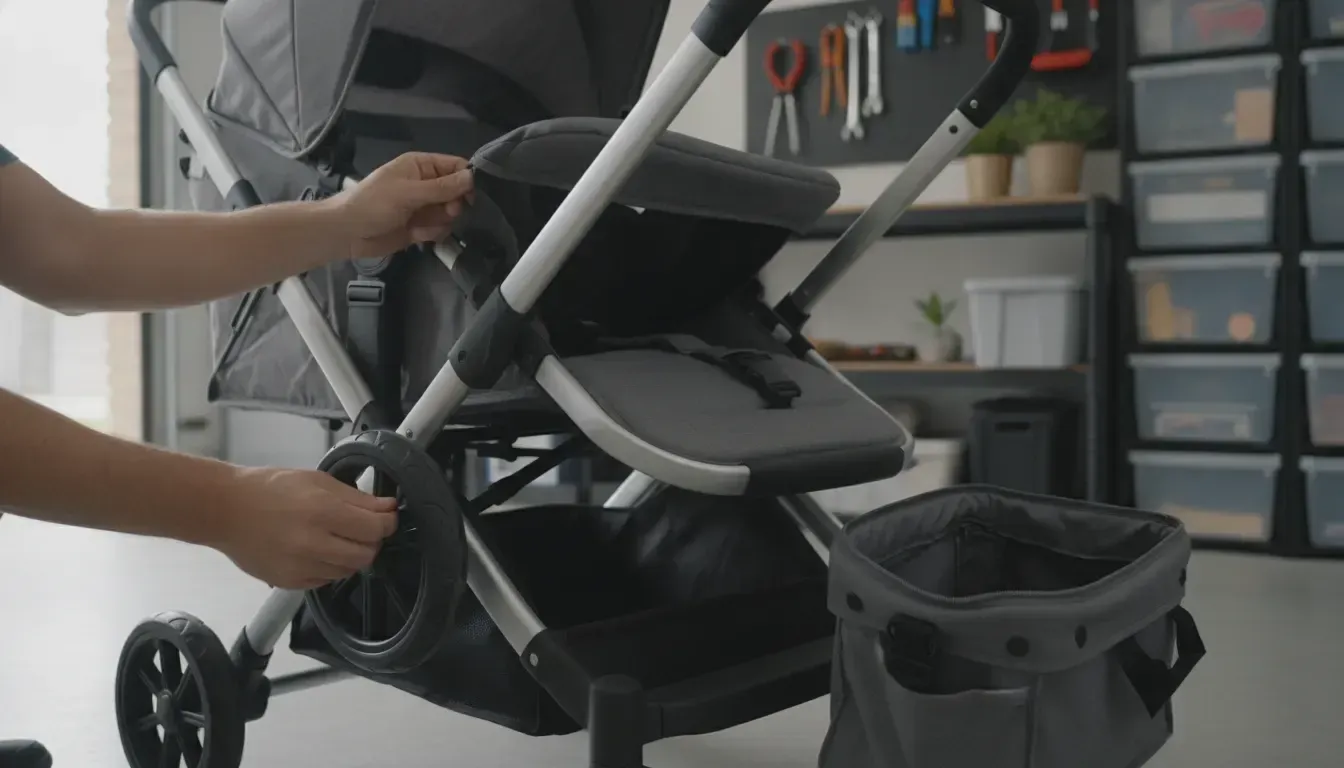
A simple ownership routine
- After each outing: Remove crumbs, sand, leaves, and wet items before folding or storing the wagon.
- Weekly during heavy use: Look at wheels, brakes, harnesses, canopy attachments, and high-touch adjustment points.
- Before a major trip: Open and fold the wagon, test normal locking points, and confirm that needed accessories are attached correctly.
- At the end of a season: Clean and dry the wagon, note any parts to order, and store it in a dry location away from unnecessary heat or moisture.
Do not use household substitutes for missing safety hardware, and do not continue using a component that is cracked, loose, or not working as intended. The goal of maintenance is not to make a wagon look new at any cost. It is to keep normal functions predictable and to address wear before it interrupts a family outing.
Which Keenz stroller wagon is a good fit for an ownership plan?
There is no single best ownership setup for every family. A compact VIVA configuration may fit a city routine and smaller storage area, while a MOOV model may better suit families who prioritize reclining comfort and all-terrain use. VYOO, XC EVO, DUO, and other Keenz series offer their own combinations of seating, configuration, and accessories. Compare the exact specifications rather than assuming that a feature from one series carries across the lineup.
For a closer look at current options, start with the full Keenz stroller wagon collection, then review the series-specific details. Confirm the current specifications and included accessories for the model that fits your family's routines before making a decision.
See which Keenz accessories can support your family's everyday routes.
Frequently Asked Questions About Stroller Wagon Ownership
Can I use any replacement wheel on a stroller wagon?
No. Wheels, mounts, and axles can be model-specific. Match the replacement listing to the exact Keenz series and position, such as front or rear, and contact Keenz if your model or generation is unclear.
Is it better to repair a stroller wagon or buy a new one?
It depends on the condition of the frame and the part involved. A removable fabric, wheel, canopy, or hardware component may be replaceable, while a damaged frame or locking system needs careful evaluation. Use the official replacement catalog and ask Keenz for guidance when safety or compatibility is uncertain.
What are the most useful stroller wagon accessories?
The most useful accessory is the one that solves a repeated need. Common categories include shade and weather protection, storage, comfort, travel, terrain, cup holders, phone holders, and activity trays. Choose based on your routes and your wagon's compatibility rather than buying every available add-on.
Can a stroller wagon support a child with special needs?
Some families use stroller wagons for extra space, rest, storage, or outdoor mobility, but suitability depends on the child's individual needs and the exact wagon specifications. Review harnesses, seating, brakes, wheel design, weight limits, and caregiver handling with the child's qualified care team when appropriate.
How do I know which Keenz accessory fits my wagon?
Start with the series name, passenger configuration, and product generation. Read the accessory listing for compatibility language, compare connection points, and contact Keenz with photos or order information when the match is not clear.
Where can I find Keenz stroller wagon replacement parts?
Keenz maintains an official replacement parts collection with model-specific wheels, canopies, fabric, hardware, and other components. Review the listing carefully before ordering and use the official catalog for the most current availability.
Explore Keenz stroller wagons and plan your next ownership upgrade.